Top Touch Screen Display Solutions for Global Buyers?
The global market for Touch Screen Displays is witnessing unprecedented growth. According to a recent report by Market Research Future, the industry is anticipated to reach $73 billion by 2025, driven by rapid technological advancements. Touch screen technology is not just a trend; it’s becoming a standard in various sectors, from consumer electronics to healthcare.
Industry expert Dr. Emily Chen emphasizes the importance of user interaction. She states, “Touch Screen Displays are revolutionizing user experiences by providing intuitive interfaces.” This assertion highlights the shift in how consumers engage with technology. As competition grows, businesses must stay ahead of these changes.
Despite advancements, challenges remain. The market faces issues such as production costs and environmental impacts. Companies must address these concerns while maintaining quality. Balancing innovation with responsibility will be crucial for future success.

Overview of Touch Screen Display Technologies
Touch screen display technologies have transformed the way we interact with devices.
Capacitive, resistive, and OLED are some key types.
Capacitive screens respond to finger touches, creating a smooth user experience.
They offer high clarity and excellent durability.
However, they can struggle with gloved hands or in wet conditions.
Resistive displays rely on pressure, making them effective in various environments.
Users can interact with them using a stylus or finger. This technology is often less sensitive than capacitive displays.
It can be prone to scratches and wear over time.
On the other hand, OLED screens provide vibrant colors and deep contrasts.
They are lightweight and flexible but can be pricey and may suffer from burn-in issues.
Analyzing these technologies reveals a spectrum of choices for global buyers.
Capacitive screens shine in consumer gadgets, while resistive displays suit industrial equipment.
OLED is gaining traction in luxury markets.
Each option has unique pros and cons, requiring careful consideration.
Buyers must evaluate their specific needs and potential limitations.
Understanding these factors leads to informed decisions in a competitive landscape.
Key Features to Consider When Choosing Touch Screen Displays
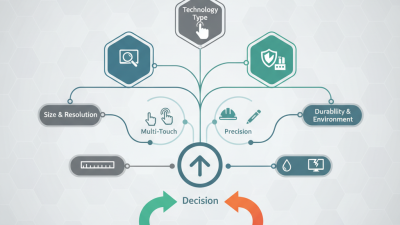
When selecting touch screen displays, several key features deserve attention. One crucial aspect is the display technology. Options include capacitive and resistive screens. Capacitive screens are responsive and offer a smoother experience. However, they may not work with styluses or gloves. On the other hand, resistive displays can handle diverse input methods but may not be as sensitive.
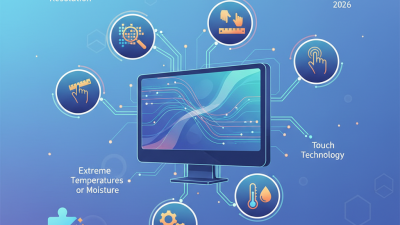
Another important factor is screen size and resolution. Larger displays can enhance user interaction, particularly in settings like kiosks. High resolution improves clarity and detail. Yet, larger screens can also mean higher costs. Additionally, consider the environment where the display will be used. Outdoor displays require brightness and durability that indoor models may lack.
Durability and responsiveness are essential as well. Look for specifications like scratch resistance and multi-touch capabilities. Some displays perform poorly in high-traffic areas, leading to wear and tear. Assessing user needs and expected usage is vital. Not all features will suit every application, and understanding limits is part of the decision-making process.
Comparison of Leading Touch Screen Display Manufacturers
The touch screen display market is evolving rapidly. Recent reports show a projected growth rate of 10.5% CAGR from 2023 to 2028. This surge indicates a strong demand across various sectors, such as retail, automotive, and healthcare. Buyers need to compare leading manufacturers closely. Evaluating aspects like resolution, touch technology, and cost is crucial.
Key players dominate the market. They often differ in their technology capabilities. For instance, some manufacturers focus on capacitive touch screens, while others may specialize in resistive types. Advanced features like multi-touch sensitivity play a role in user experience. According to industry studies, displays with higher resolution and durability are increasingly preferred.
However, some challenges persist. The competition leads to price wars that may compromise quality. Manufacturers sometimes rush product development, affecting reliability. These factors highlight the importance of thorough research before purchasing. Buyers should weigh technical specifications against company reputation and customer reviews for better decision-making.
Top Touch Screen Display Solutions - Market Share Comparison
Market Trends Impacting Touch Screen Display Solutions
The touch screen display market is evolving rapidly. Increasing demand for smart devices drives innovations. Advanced technologies like capacitive and resistive screens are now common. They improve user interactions significantly. As people seek intuitive experiences, these screens are becoming essential in various applications.
Sustainability is another key trend. Consumers and companies are focusing on eco-friendly materials. The industry is exploring biodegradable options for touch screens. However, achieving sustainability without sacrificing performance remains a challenge. Manufacturers face pressure to balance these conflicting priorities.
Moreover, the shift toward remote work has created new needs. Businesses require reliable touch screen solutions for remote collaboration. This shift pushes innovation in software and hardware. Yet, ensuring compatibility across different systems can be complex. Stakeholders must navigate these evolving demands to stay competitive in the touch screen display sector.
Future Innovations in Touch Screen Display Technology
Touch screen display technology is evolving rapidly. The integration of artificial intelligence is one significant innovation. AI brings enhanced responsiveness and accuracy. Users can expect smoother interactions and less lag time. This not only improves user experience but also opens doors to new applications.
Another trend is the shift towards flexible displays. These allow for innovative designs, fitting various shapes and applications. Imagine curved screens or displays embedded in furniture. This flexibility can lead to inventive use cases in homes and businesses. However, challenges remain in durability and cost-effectiveness.
While many advancements are exciting, the market faces hurdles. Not all innovations find immediate acceptance. Consumer expectations vary widely. Educating users about new functionalities can be a slow process. Companies must also navigate sustainability concerns. Balancing innovation with environmental impact is crucial. The future of touch screen technology holds promise, but careful consideration is needed.