Leave Your Message

How to Choose the Right TFT Touch Screen for Your Project?

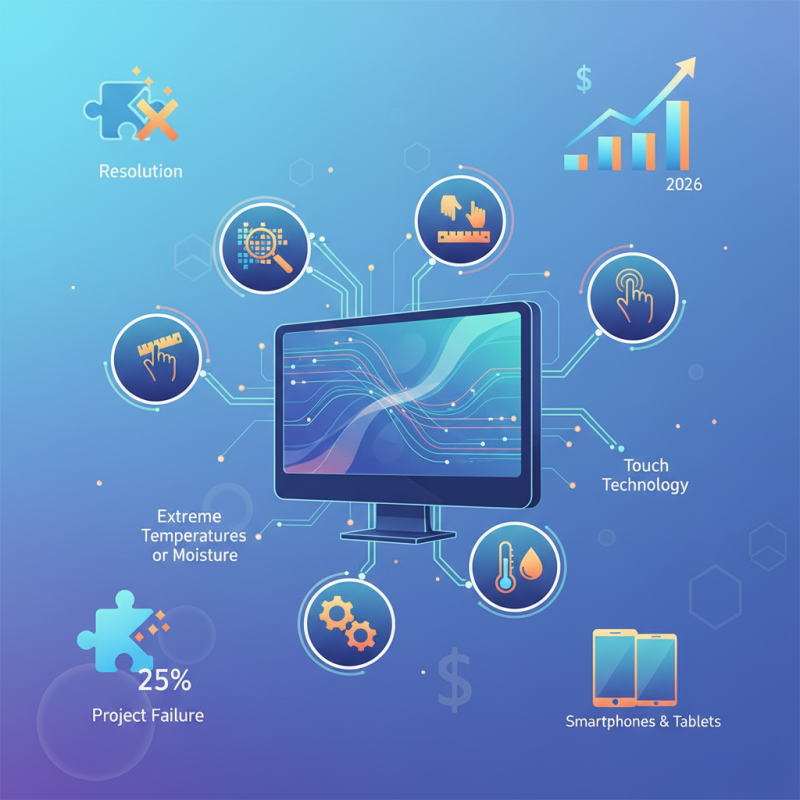
Choosing the right TFT touch screen for your project is crucial. The global market for TFT touch screens is projected to reach USD 30 billion by 2026. This rapid growth highlights their increasing importance in various sectors. Factors such as resolution, size, and touch technology impact your choice.

TFT touch screens are known for their clarity and responsiveness. They can be found in smartphones, tablets, and industrial equipment. However, not all TFT screens are equal. Selecting an inferior product can lead to project setbacks. Research from industry experts indicates that 25% of projects fail due to inadequate displays.

Consider your project requirements carefully. Understand the environment in which the screen will operate. Will it be exposed to extreme temperatures or moisture? Small details matter and can make a difference in performance. Let's delve deeper into finding the perfect TFT touch screen for your needs.
How to Choose the Right TFT Touch Screen for Your Project?

Understanding the Basics of TFT Touch Screens

How to Choose the Right TFT Touch Screen for Your Project?

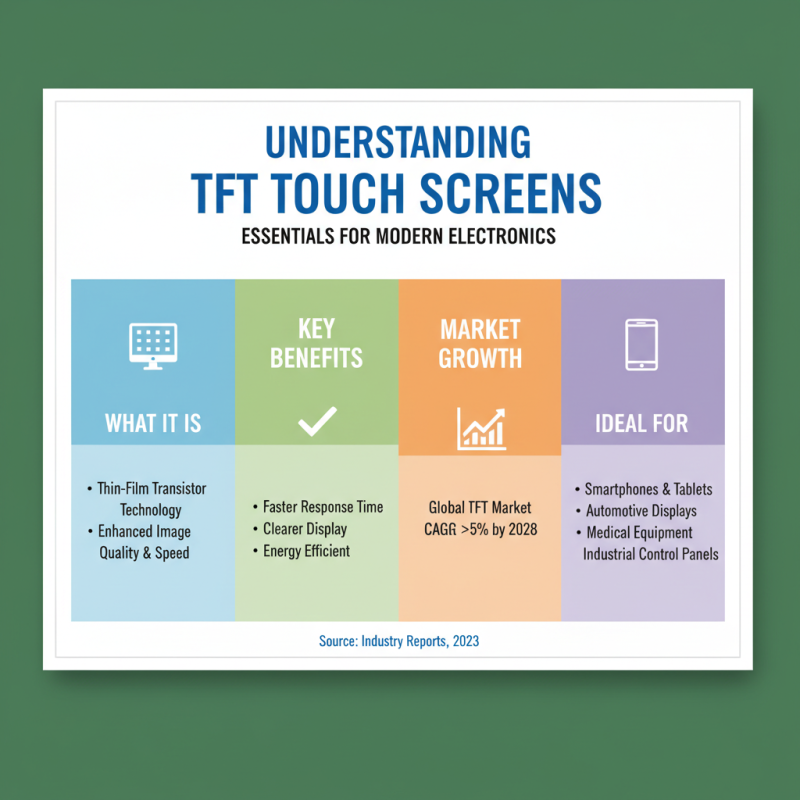
TFT touch screens have become essential in modern electronic devices. Understanding their basics can help in making the right choice for your project. These screens use thin-film transistor technology, which provides better image quality and faster response times compared to older LCD screens. Recent industry reports indicate that the global TFT market is projected to grow significantly, with an expected CAGR of over 5% by 2028.

Key specifications to consider include resolution, brightness, and response time. A higher resolution ensures clearer images, and brightness levels affect visibility under different lighting. Moreover, response time influences user experience, especially in applications requiring quick interactions. According to a report by Market Research Future, more than 40% of consumers prioritize these features in their purchasing decisions.

Despite the advantages, there are challenges. Choosing the right touch technology, whether resistive or capacitive, can be tricky. Each type has its pros and cons. For instance, resistive screens are more affordable and work well with gloves. However, they may lack responsiveness compared to capacitive screens. It’s important to weigh these factors against your project’s specific needs.


Identifying Project Requirements and Specifications

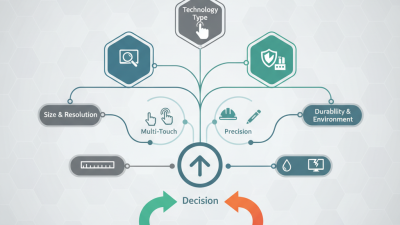
When choosing a TFT touch screen, clearly identifying project requirements and specifications is critical. Start by assessing the display size, resolution, and touch technology. A recent report by Touch Display Research indicates that a 5 to 7-inch screen is suitable for most handheld devices. For applications like panels or monitors, larger screens may be necessary.

The interface type also matters. Common options include SPI and I2C. According to a study from Display Interface, SPI offers faster data rates, ideal for applications needing high responsiveness. For simpler tasks, I2C can be sufficient. Compatibility with your microcontroller or processor is essential, too. Incomplete compatibility can lead to project delays.

Additionally, consider environmental factors. Will the screen be used in bright sunlight? Will it need to function in extreme temperatures? Reports from the Society for Information Display highlight that temperature range and brightness ratings can significantly affect performance. Evaluate your use case accurately. Sometimes, compromising on one spec can lead to surprises later. Ignoring details now may create obstacles later in development. Understand your project's specifics, and choose wisely to enhance your outcomes.

Comparing Screen Sizes and Resolutions for Optimal Use

How to Choose the Right TFT Touch Screen for Your Project?

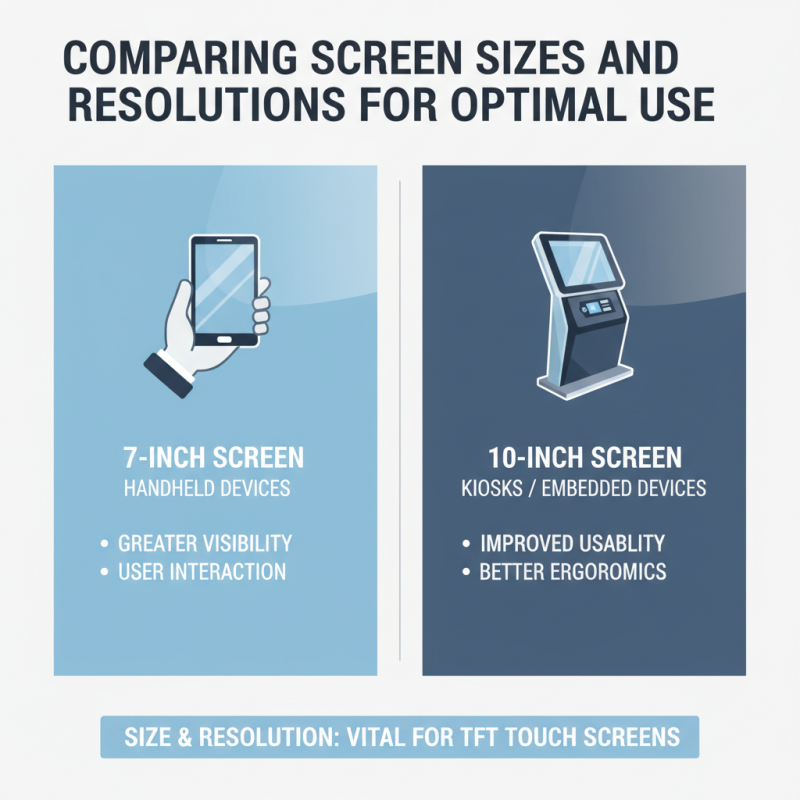
When choosing a TFT touch screen, size and resolution are vital considerations. Larger screens provide greater visibility, which is crucial for applications requiring user interaction. For instance, a 7-inch screen may suit handheld devices. In contrast, a 10-inch screen is better for kiosks or embedded devices. The choice of size influences usability and ergonomics.

Resolution is equally important. Higher resolutions deliver sharper images and text. For example, a 800x480 resolution may suffice for basic tasks. However, a resolution of 1280x800 offers clarity that enhances the user experience. Balancing these factors is key. A screen that is too small or too low in resolution may frustrate users. It’s essential to assess how the device will be used.

Sometimes, users overlook the aspect of responsiveness. A larger screen may be less responsive than a smaller one. Touch sensitivity can vary, regardless of size or resolution. Testing different screens helps identify the best fit for your project. Choosing the right balance between size and resolution can lead to more effective user engagement.

Evaluating Touch Technologies and Their Advantages

When choosing a TFT touch screen, understanding touch technologies is crucial. Capacitive and resistive are the two main types. Capacitive screens respond to touch through conductivity. This makes them highly sensitive and more responsive to gestures. They excel in applications requiring multi-touch capabilities. On the downside, they may not work well with gloves or styluses.

Resistive screens, on the other hand, operate by applying pressure. They are versatile and work with styluses or gloves. This makes them suitable for industrial applications or outdoor environments. However, they tend to be less sensitive than capacitive screens. Users may find them less intuitive, particularly in a fast-paced setting.

Evaluating the specifics of your project is vital. Consider factors like environment, type of interaction, and user expertise. Each technology has its trade-offs. A detailed assessment of your requirements can guide you to the right choice. Balancing sensitivity and practicality often leads to better user experience.

How to Choose the Right TFT Touch Screen for Your Project? - Evaluating Touch Technologies and Their Advantages

Touch Technology Advantages Typical Use Cases Cost Range
Resistive Touch Cost-effective, works with gloves and stylus Industrial control, medical devices $20 - $50
Capacitive Touch Highly sensitive, supports multi-touch gestures Smartphones, tablets, consumer electronics $30 - $100
Infrared Touch Durable, large sizes, visibility in bright light Kiosks, interactive displays $100 - $500
Optical Touch High resolution, no wear and tear Digital signage, large display systems $200 - $600

Assessing Cost and Supplier Options for Your TFT Display

When selecting a TFT touch screen, cost and suppliers are critical factors. Prices can vary significantly, influenced by display size, resolution, and technology. Conduct thorough research to compare costs. Look for suppliers with a track record of reliability. Reviews and testimonials can provide valuable insights into their performance.

Tips: Consider sourcing multiple quotes. This will give a clearer picture of the market rates. It's common to underestimate shipping costs—factor this in your budget. Some suppliers may offer better warranties, highlighting their commitment to product quality.

While exploring your options, also reflect on the long-term implications of your choice. Cheaper displays may have hidden costs. Think about durability and support. A low initial price might mean higher expenses down the line. Balance the immediate financial outlay with potential longevity. Aim for a display that aligns with your project needs, ensuring that cost does not overshadow quality.

Cost Comparison of Different TFT Touch Screen Options