2026 Top Touch Screen Display Innovations and Trends to Watch?
The landscape of Touch Screen Display technology is evolving rapidly. As we look toward 2026, several innovations and trends are emerging that promise to reshape user experiences. These advancements encompass not only design improvements but also enhancements in functionality and interactivity.
In modern applications, Touch Screen Displays are becoming integral to various industries, from healthcare to education. Companies are investing heavily in research and development to create screens that are more responsive, durable, and energy-efficient. For example, flexible displays are gaining traction, offering new possibilities for device design. Additionally, integration with AI is expected to enhance user interaction.
However, challenges exist. Manufacturers face issues like screen fragility and touch accuracy under varying conditions. Reflection on these obstacles can lead to more robust solutions. As innovations continue to surge, it’s essential to consider both the potential and the limitations of Touch Screen Display technology.
Emerging Technologies Shaping Touch Screen Displays in 2026
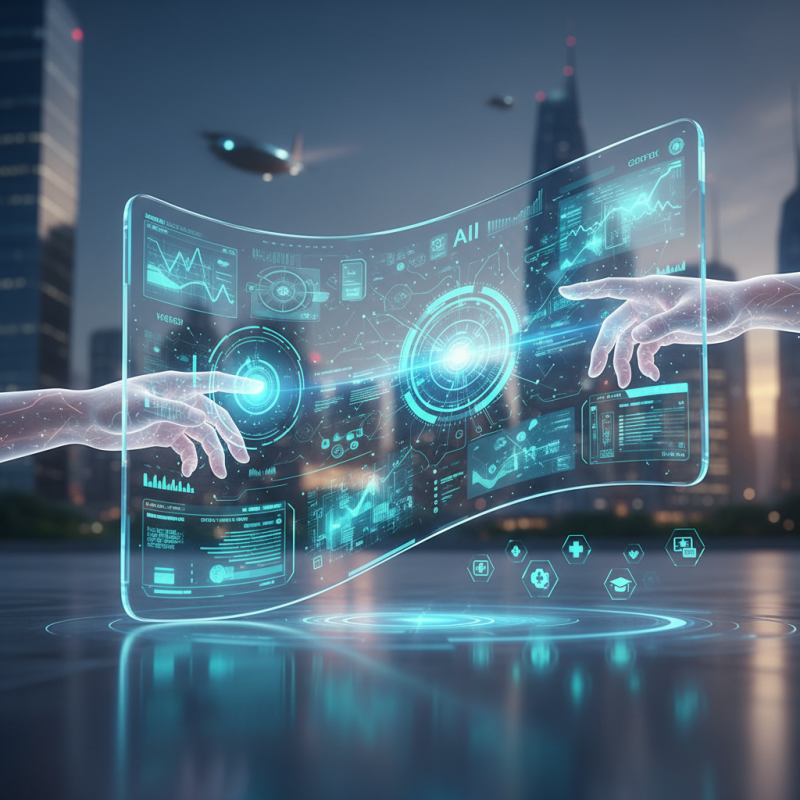
In 2026, touch screen displays will see profound changes driven by emerging technologies. One exciting trend is the integration of artificial intelligence. AI will enable touch screens to learn user preferences, creating a responsive experience. Imagine screens adjusting sensitivity based on user habits or even predicting actions. This ability could streamline workflows and enhance user satisfaction.
Another significant trend is flexible display technology. Advances in materials will allow for screens that can bend and fold. Such innovations will revolutionize device design. Users could carry screens that transform from small to large. However, developing truly durable flexible screens poses a challenge. Manufacturers must ensure their longevity in daily use.
Moreover, advancements in haptic feedback will deepen user interaction. By providing tactile sensations, users can feel virtual textures. This technology could redefine gaming and design applications. However, creating a universal standard for haptic feedback remains a hurdle. The complexity of human touch is tough to replicate accurately. Balancing innovation and practicality will guide these developments in the coming years.
2026 Touch Screen Display Innovations Trends
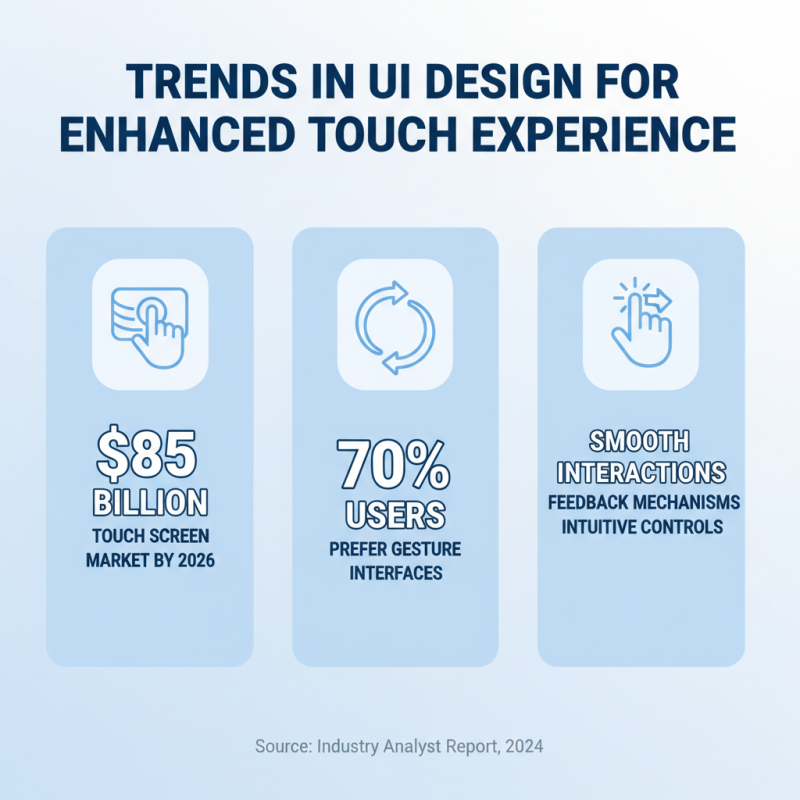
Trends in User Interface Design for Enhanced Touch Experience
The world of user interface design is rapidly evolving, particularly in the touch screen display sector. Recent studies indicate that by 2026, the market for touch screen technology is projected to reach $85 billion, driven by advancements that focus on usability and user experience. Designers are now prioritizing smooth interactions, feedback mechanisms, and intuitive controls, enhancing engagement. A report from a leading industry analyst highlights that 70% of users prefer interfaces that respond to gestures, confirming a shift towards more natural user interactions.
Emerging trends emphasize customization and accessibility. Touchscreens are adapting to meet diverse user needs, including color contrast adjustments and tactile feedback. Data shows that over 65% of users find customized controls improve their overall experience. However, it's essential to acknowledge that not all designs achieve this goal effectively. Some interfaces remain cluttered, hindering usability. This calls for continuous reflection on design choices.
Moreover, the integration of AI into touch interfaces is on the rise. AI can analyze user behaviors, allowing for a more tailored experience. Yet, this technology can pose privacy concerns, indicating a delicate balance between innovation and user trust. As we approach 2026, designers must strive for outputs that enhance touch interactivity without alienating users from their privacy.
Advancements in Multi-Touch and Gesture Recognition Technology
The evolution of multi-touch and gesture recognition technologies is a driving force in touch screen displays. According to a recent industry report, the multi-touch technology market is expected to grow at a CAGR of 17% from 2023 to 2026. This rapid growth reflects the rising demand for intuitive user interfaces across applications in retail, education, and healthcare.
Companies are focusing on developing more responsive gesture recognition systems. Innovations such as light-based sensing and advanced algorithms enhance accuracy and speed. For instance, a leading technology study highlighted that 80% of users prefer gesture controls over traditional touchscreen inputs. This preference highlights a shift towards more interactive experiences. However, implementation remains challenging, as inaccuracies in gesture recognition can frustrate users.
As technology advances, some limitations still exist. Ambient lighting can impact gesture detection efficiency. Additionally, users must sometimes adapt to new behaviors, leading to mixed experiences. Continuous refinements are essential to meet evolving user expectations. The quest for seamless interaction is ongoing and far from perfect.
Integration of AI and Machine Learning in Touch Display Systems
The integration of AI and machine learning is reshaping touch display systems. This technology enables displays to learn user behaviors. For instance, a display can adapt its responses based on how a user interacts. This personalization leads to greater efficiency and satisfaction. Users expect touch screens to respond quickly and intuitively.
However, not all advancements come without challenges. The reliance on AI can lead to privacy concerns. Users may worry about how their interactions are being tracked and analyzed. Additionally, the algorithmic learning process may not always get it right. Errors in recognizing gestures or commands can frustrate users. Balancing innovation and user trust must be a priority.
Moreover, the complexity of integrating AI into systems can also slow down development. Engineers face hurdles in creating seamless interactions. If the technology is too complex, users may feel overwhelmed. Finding a middle ground between intelligence and user-friendliness is crucial for future innovations in touch display systems. The journey is ongoing, requiring constant feedback and improvement.
2026 Top Touch Screen Display Innovations and Trends to Watch
| Innovation/Trend |
Description |
Potential Impact |
AI Integration |
| Flexible Displays |
Touch screens that can bend and fold, enabling new form factors. |
Increases portability and usability in various environments. |
AI can optimize display layout and usage based on user behavior. |
| Enhanced Sensitivity |
Improved responses to touch inputs, including fine gestures. |
Allows for more precise control in applications like design and editing. |
Machine learning algorithms can enhance sensitivity based on user needs. |
| Holographic Interaction |
Integration of holographic elements into touch displays for 3D interaction. |
Revolutionizes gaming and simulation experiences. |
AI can generate interactive holographic content on the fly. |
| Gesture Control |
Non-touch gesture recognition to control displays. |
Enhances user experience, especially in public settings. |
AI enhances gesture recognition accuracy and responsiveness. |
| Eco-Friendly Materials |
Use of sustainable materials in touch display manufacturing. |
Reduces environmental impact and resource consumption. |
AI can optimize resource utilization in production processes. |
Sustainability Innovations in Touch Screen Manufacturing for 2026
The touch screen display industry is evolving, particularly in sustainability. Manufacturers are seeking eco-friendly materials and processes. Innovations focus on reducing energy consumption during production. Recycled components could cut waste in the supply chain. This could lead to a greener future for technology.
There’s a need for balance, though. Not all sustainable practices yield immediate benefits. Some might increase production costs or complicate logistics. Companies must assess long-term versus short-term impacts. Understanding these trade-offs is crucial for informed decision-making in touch screen manufacturing.
Manufacturers will also focus on lifecycle assessments. This examines a product's environmental impact from start to finish. Such evaluations help identify areas for improvement. Increased transparency in operations reflects a commitment to sustainability. It remains to be seen how these initiatives will shape the market, but the potential is significant.