How to Choose the Best TFT Touch Screen for Your Project?
In the ever-evolving world of technology, selecting the right TFT Touch Screen for your project can be a daunting task. Industry expert Dr. Emily Chen states, "The success of your device often hinges on the quality of the touch interface." This highlights the importance of choosing a suitable TFT Touch Screen effectively.
When considering a TFT Touch Screen, several factors come into play. First, screen size affects usability and user experience. The resolution, too, is vital. Higher resolutions provide sharper images, which can enhance user interaction. Additionally, consider the touchscreen technology—capacitive or resistive—as each type has its unique advantages.
Moreover, manufacturers and specifications vary greatly. It's essential to assess dimensions, responses, and durability. With many options available, one can easily feel overwhelmed. Reflecting on your project's specific needs is crucial to making an informed decision, as the wrong choice could lead to poor user engagement.

Understanding TFT Touch Screen Technology
Choosing the right TFT touch screen involves understanding the technology behind it. TFT stands for Thin Film Transistor, which provides better image quality. This technology allows for brighter colors and improved viewing angles. It works by controlling each pixel individually, resulting in precise displays.
When selecting a TFT screen, consider resolution and size. Higher resolutions provide sharper images but can increase costs. Screen size affects usability; larger screens offer more interactive space. Think about the project's requirements. A smaller screen might suffice for simple displays, while larger ones are better for applications needing detailed visuals.
Tips: Check the screen's viewing angle. Poor angles can limit usability in certain projects. Also, evaluate the touch response. Slow responsiveness can frustrate users. Experiment with various screens before settling on one. This practice can reveal unforeseen challenges. Reflect on your experience while testing different options. Adjustments may be necessary to meet user expectations.
Key Features to Consider in a TFT Touch Screen
When selecting a TFT touch screen, certain key features are crucial for ensuring optimal performance. First, consider the screen resolution. Higher resolutions provide sharper images and enable clearer text. According to industry reports, screens with at least 800x480 pixels are recommended for most applications. This resolution helps enhance user experience by improving visual clarity.
Touch sensitivity is another vital aspect. A responsive screen enhances usability, especially in devices requiring precise input, like kiosks or medical devices. A study showed that screens with capacitive touch technology often offer better sensitivity compared to resistive screens. This leads to a smoother interaction and reduces user frustration.
Additionally, consider the display size and aspect ratio. Larger screens may not always be the best choice; they can increase costs and require more space. The appropriate size often depends on the application and user comfort. For example, a 5-inch screen might suffice for handheld devices, while larger machines could demand up to 10 inches or more. Evaluate the balance between size and practicality to avoid over-specifying your project needs.
Evaluating the Compatibility with Your Project
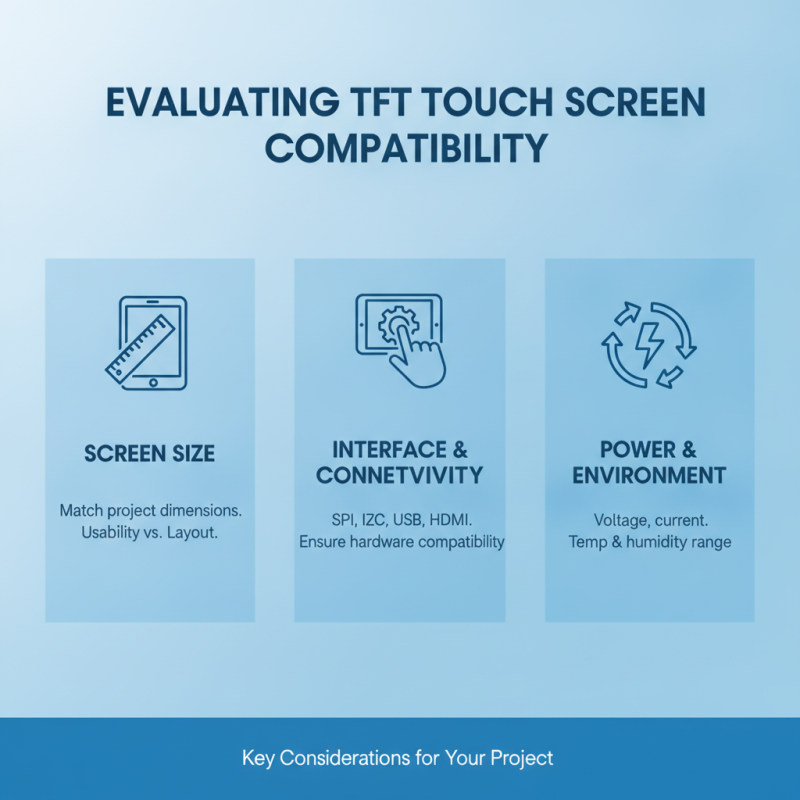
When selecting a TFT touch screen, project compatibility is crucial. Begin by evaluating the screen size. It should align with your project's dimensions. A small display may limit usability, while an oversized one might not fit your layout.
Next, consider the screen resolution and color depth. Higher resolutions offer sharper images, enhancing user experience. However, they may require more processing power, which could impact your device's performance. It's essential to balance visual quality with resource availability.
Interface compatibility is another key factor. Check the connection types your project supports. Popular interfaces include SPI and I2C, but compatibility varies. Testing your setup can reveal unexpected integration issues. Planning for these aspects can save time and resources in the long run. Testing, though tedious, helps ensure smooth operation. Remember, every project is unique, so thoughtful consideration is needed.
Assessing Display Quality and Resolution
When selecting a TFT touch screen, the display quality and resolution are crucial factors. A high-resolution screen displays vibrant colors and sharp images. This matters greatly for applications needing precise visuals, like medical devices or process controls. A resolution of at least 800x480 pixels is a standard baseline. Higher resolutions provide clearer details but may demand more processing power.
Investing in a TFT screen that supports various color depths is essential. A 16-bit color depth is common, but 24-bit offers a broader color spectrum. Consider the ambient light conditions as well. Bright environments require screens with higher brightness ratings. A contrast ratio of at least 500:1 can significantly enhance visibility in diverse settings.
Avoid overemphasizing resolution alone. You must assess other qualities too. Touch responsiveness is also vital. Evaluating the panel's response time ensures a smooth user experience. Test different screens if possible. This helps identify any inconsistencies in display quality or touch performance, informing your decision.
Comparing Cost and Supplier Options
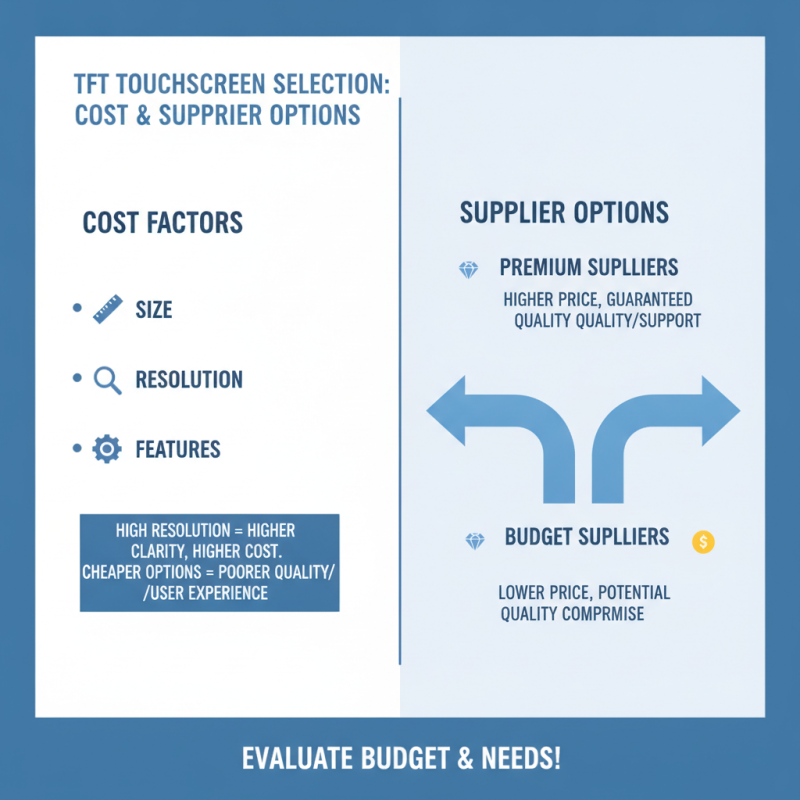
When selecting a TFT touch screen, cost and supplier options are crucial. The price varies widely. Factors influencing this include size, resolution, and features. A panel with high resolution may cost more but offer superior clarity. Cheaper options may compromise quality. This can lead to poor user experience. Evaluate your budget before making a decision.
Supplier reliability is another key aspect. Not all suppliers provide support after purchase. Some may offer limited warranties. Researching supplier reputation is essential. Look for customer reviews and case studies. They can provide vital insights into supplier performance. Consider their customer service as well. A responsive supplier can make troubleshooting easier in the future.
Finding the right balance between cost and supplier reliability can be challenging. Sometimes, the cheapest option is tempting, but hidden costs can arise. Troubles with compatibility or lack of support can lead to delays. Reflect on these factors carefully before finalizing your purchase. It requires thorough analysis to ensure the best choice for your project.