China Top Touch Screen Monitor Buying Guide for Your Needs?
The demand for Touch Screen Monitors is on the rise. According to industry reports, the global market for these devices is projected to grow significantly. Businesses are increasingly adopting touch screen technology for its user-friendly features and interactive capabilities.
China is a key player in the touch screen monitor industry. The Canton Fair, set to take place in April and May 2026, will spotlight advanced manufacturing and electronics. This event offers opportunities to discover cutting-edge touch screen solutions from verified suppliers. AI-driven tools will enhance the experience, helping buyers navigate the vast exhibition area efficiently.
However, selecting the right monitor can be challenging. Factors such as screen size, resolution, and touch sensitivity must be considered. Buyers often overlook certain features, leading to dissatisfaction months later. Navigating the vast array of options requires careful research and reflection on specific needs and usage scenarios.

Understanding Touch Screen Monitor Technologies Available in China
Touch screen monitor technology has evolved significantly in recent years. In China, understanding the available options is crucial. Various technologies serve different needs. Capacitive and resistive touch screens are among the most common types. Capacitive screens offer better sensitivity and clarity. They are ideal for smartphones and tablets. Meanwhile, resistive screens are often more affordable and durable. They work well in environments where gloves are worn.
A recent industry report noted that the touch screen monitor market in China is expected to grow by over 10% annually through 2025. This growth is driven by increased demand in retail and education sectors. Schools are adopting interactive displays for enhanced learning experiences. However, some concerns linger. Durability and responsiveness can vary greatly among models. Not all monitors perform equally well in bright settings.
It's important to analyze your specific use case. Consider how you will use the monitor. Will it be for presentations, interactive kiosks, or something else? Finding a balance between price and performance is not always easy. Many options exist, but only a few will meet your precise needs. Take the time to research before making a purchase.
Key Features to Consider When Buying a Touch Screen Monitor
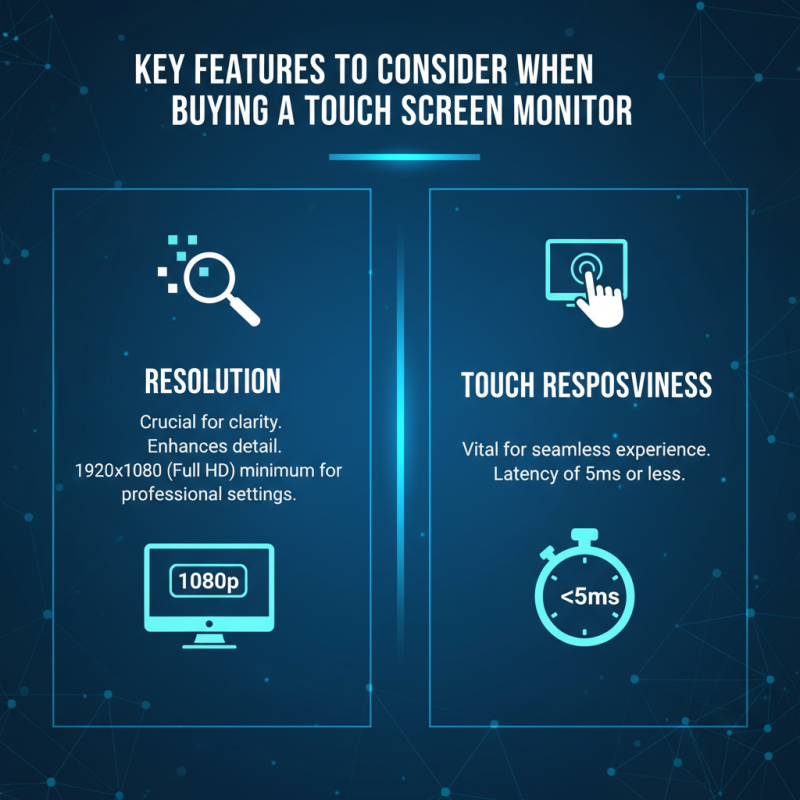
When selecting a touch screen monitor, several key features can significantly impact your decision. Resolution is crucial. A higher resolution enhances clarity, making it ideal for detailed tasks. According to industry reports, monitors with at least 1920x1080 (Full HD) resolution are becoming standard in professional settings. Touch responsiveness is another vital aspect. A latency of 5ms or less ensures a seamless experience.
Consider the display type as well. IPS panels offer better color accuracy compared to TN panels. This is essential for tasks requiring exact color representation. Brightness levels also matter; a monitor with at least 250 nits is preferable for well-lit environments. It improves visibility and usability significantly.
Tips: Always assess your specific needs. If you're using the monitor for presentations, portability might be crucial. Test the touch response before purchasing. Feel how intuitive it is to navigate.
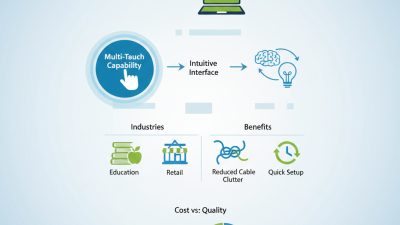
Another often overlooked factor is durability. Monitors with reinforced screens are better for high-traffic use, as they resist wear and tear. Check warranty terms to gauge manufacturer confidence. Remember, features like multi-touch capability can enhance productivity, but they might not be necessary for every user. It’s essential to strike a balance between features and your actual needs.
Popular Brands and Models of Touch Screen Monitors in China
When exploring the landscape of touch screen monitors in China, several popular models stand out. Many consumers gravitate toward monitors featuring high-resolution displays and responsive touch technology. These options enhance user experiences in both personal and professional settings. The growing demand for such monitors has led to a diverse range of choices on the market.
Different brands tend to specialize in specific aspects. Some focus on ultra-slim designs, while others emphasize durability. It's worth noting that not all high-end features are necessary for everyone. For instance, a casual user may not need the latest touchscreen sensitivity but might appreciate ease of use and affordability instead.
In addition, customer reviews can often be mixed. Some users praise their devices, while others criticize them for having connectivity issues. This hints at the reality that even top brands have room for improvement. Ensuring the right balance between features and your specific needs is crucial. It’s wise to consider what you'll primarily use the monitor for before making a decision.
Assessing Your Budget for a Touch Screen Monitor Purchase
When considering a touch screen monitor, assessing your budget is crucial. These devices vary widely in price. Entry-level models can start around a few hundred dollars. Higher-end monitors may go beyond a thousand. Knowing your financial limits helps narrow your options.
Think about what features are essential. Do you need high resolution? Maybe multi-touch capabilities are key for your use. Spending more for these features might be worth it. However, sometimes, you could find a decent model that meets basic needs.
It’s wise to evaluate your actual usage. If it’s for casual browsing or kids' games, a cheaper option may suffice. But for professional use, investing in quality could be necessary. Look for reviews and ratings within your budget. Reflect on whether you need all the bells and whistles, or if a simpler model will do.
China Top Touch Screen Monitor Buying Guide for Your Needs? - Assessing Your Budget for a Touch Screen Monitor Purchase
| Screen Size |
Resolution |
Touch Technology |
Price Range (CNY) |
Ideal Usage |
| 21.5 inches |
1920 x 1080 |
Capacitive |
1,500 - 2,000 |
Educational |
| 24 inches |
2560 x 1440 |
Infrared |
2,000 - 2,800 |
Business Presentations |
| 27 inches |
3840 x 2160 |
Optical |
3,000 - 4,000 |
Interactive Displays |
| 32 inches |
3840 x 2160 |
Projected Capacitive |
5,000 - 7,000 |
Advanced Collaboration |
| 42 inches |
1920 x 1080 |
Multi-Touch |
8,000 - 12,000 |
Digital Signage |
Where to Buy Touch Screen Monitors: Online and Offline Options in China
When looking to buy touch screen monitors in China, there are various options. Many consumers prefer online platforms for convenience. Online retailers often offer competitive pricing and extensive selection. According to a recent industry report, online sales of touch screen devices in China are projected to grow by 25% annually. This growth reflects a significant trend as more buyers turn to e-commerce.
Retailers provide a wealth of information about product specs and customer reviews. However, the challenge is ensuring product quality. Some buyers report issues with subpar customer service and potential defects. A survey indicates that 30% of buyers experienced dissatisfaction with online purchases.
Offline shopping has its advantages. Visiting physical stores allows customers to test products before buying. This tactile experience is crucial for electronic devices. A report highlights that nearly 40% of consumers prefer inspecting products in person. Yet, local availability can vary greatly. Consumers may find themselves traveling to distant stores when products are limited. Both online and offline options present unique advantages but come with potential drawbacks.
Touch Screen Monitor Sales Trends in China (2023)